What Does IU Mean?#
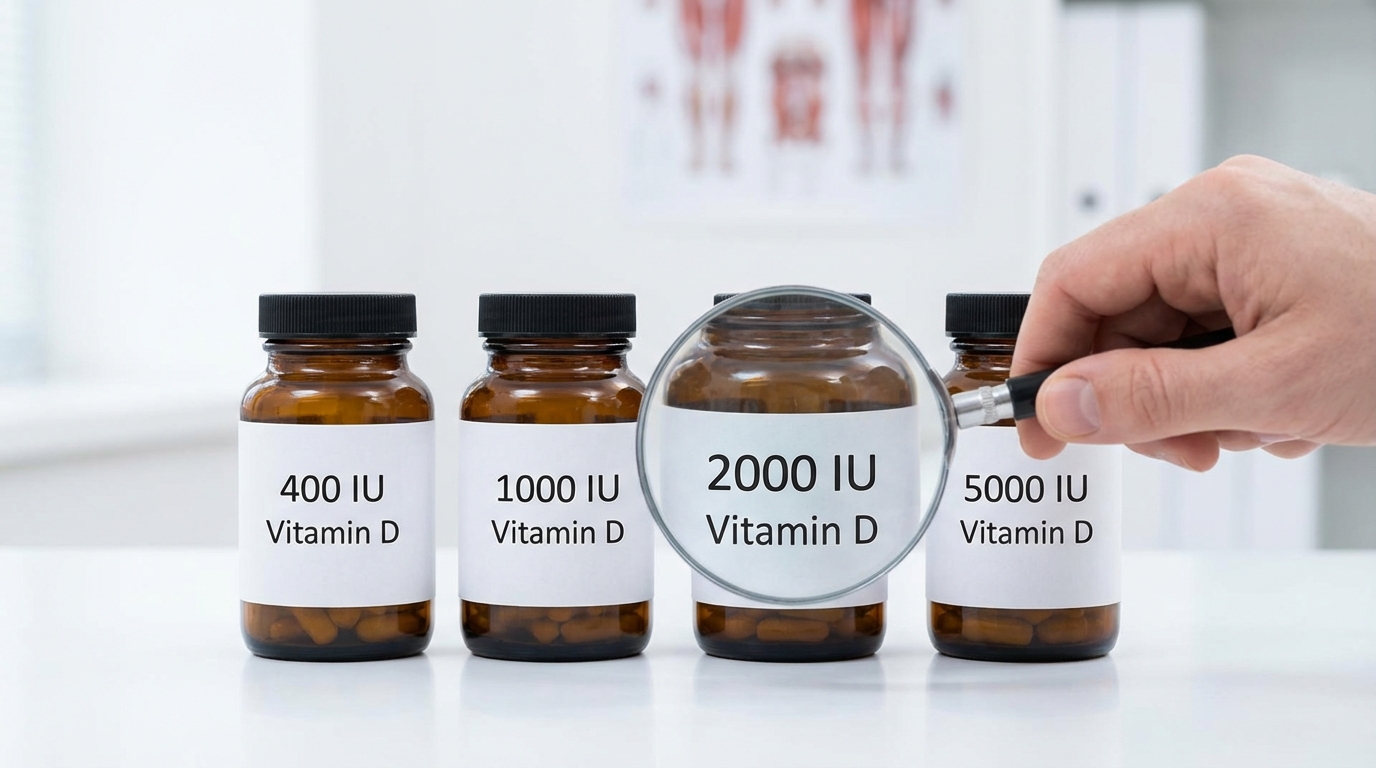
If you have ever looked at a vitamin bottle and wondered "what does IU mean?", you are not alone. IU stands for International Unit, a standardized measurement used to quantify the biological activity of vitamins, hormones, and other substances. Unlike grams or milligrams, which measure weight, an IU measures how much of a substance produces a specific biological effect in your body.
The concept of International Units dates back to 1931, when the League of Nations Health Organisation (the predecessor to the WHO) recognized that measuring certain vitamins by weight alone was inadequate. Different chemical forms of the same vitamin can have drastically different potencies. For example, natural Vitamin E is roughly 50% more biologically active than its synthetic counterpart, even at the same weight. The IU system was created to provide a consistent way to compare potency across these different forms.
Today, the World Health Organization (WHO) maintains the international standards that define IU values, while regulatory bodies like the U.S. FDA and the NIH Office of Dietary Supplements use IU alongside metric units on supplement labels.
Why Vitamins Use IU Instead of Weight#
You might wonder why your Vitamin D3 supplement says "1,000 IU" rather than "25 mcg." The reason is biological activity.
Many vitamins exist in multiple chemical forms. Vitamin A, for instance, can come as retinol (preformed Vitamin A) or as beta-carotene (a provitamin A carotenoid). Your body converts beta-carotene into retinol, but the conversion is not one-to-one. It takes roughly six times as much beta-carotene by weight to produce the same biological effect as retinol. The IU system accounts for this by assigning different conversion factors to each form.
Here is why IU matters in practice:
- Standardization across forms — 1 IU of Vitamin A from retinol and 1 IU from beta-carotene produce the same biological effect, even though the weight differs.
- Accurate dosing — Doctors and researchers can prescribe a specific biological dose without needing to specify which chemical form is used.
- Safety — Upper limits (UL) set by health authorities are more meaningful when they reflect biological activity rather than raw weight.
That said, the scientific community has been gradually shifting toward weight-based measurements (mcg, mg) for clarity. The U.S. FDA updated Nutrition Facts labels in 2020 to include metric units alongside IU. Understanding both systems is essential for making informed decisions about your supplements.
IU Conversion Factors for Common Vitamins#
Every substance has its own IU conversion factor. Here are the six most common substances that use International Units:
| Substance | 1 IU Equals | Metric Unit | Notes |
|---|---|---|---|
| Vitamin D3 (cholecalciferol) | 0.025 mcg | Micrograms (mcg) | Most common supplement form |
| Vitamin A (retinol) | 0.3 mcg RAE | Micrograms RAE | Preformed Vitamin A |
| Vitamin A (beta-carotene) | 0.05 mcg RAE | Micrograms RAE | Plant-based provitamin A |
| Vitamin E (natural, d-alpha-tocopherol) | 0.67 mg | Milligrams (mg) | Higher bioavailability |
| Vitamin E (synthetic, dl-alpha-tocopherol) | 0.45 mg | Milligrams (mg) | Lower bioavailability |
| Insulin (human) | 0.0347 mg | Milligrams (mg) | Pharmaceutical standard |
Key takeaway: There is no single "IU to mcg" or "IU to mg" formula. The conversion factor depends entirely on the specific substance. Always check which substance you are converting before doing any math.
IU vs mcg: What's the Difference?#
This is one of the most common questions in nutrition. The difference between IU and mcg comes down to what they measure:
- IU (International Unit) measures biological activity — how much of a biological effect a substance produces in the body.
- mcg (microgram) measures weight — one millionth of a gram (0.000001 g).
A microgram is an absolute, universal unit. One mcg of any substance weighs the same. An IU, on the other hand, is substance-specific. One IU of Vitamin D3 equals 0.025 mcg, while one IU of Vitamin A (retinol) equals 0.3 mcg. They are not interchangeable.
When to use which?#
- IU is commonly found on older supplement labels, medical prescriptions, and research papers.
- mcg is the modern standard preferred by the FDA on updated Nutrition Facts labels.
If your Vitamin D3 label says "1,000 IU (25 mcg)," both numbers describe the same dose — just in different units. For a deeper look at Vitamin D3 conversions, see our dedicated converter.
IU vs mg: What's the Difference?#
The relationship between IU and mg follows the same principle as IU vs mcg, but the scale is different:
- mg (milligram) measures weight — one thousandth of a gram (0.001 g). There are 1,000 mcg in 1 mg.
- IU still measures biological activity.
This distinction is especially relevant for Vitamin E, which is typically measured in milligrams rather than micrograms. Natural Vitamin E (d-alpha-tocopherol) has a conversion factor of 1 IU = 0.67 mg, while synthetic Vitamin E (dl-alpha-tocopherol) converts at 1 IU = 0.45 mg.
So how many IU are in 1 mg? Again, it depends on the substance:
| Substance | IU per 1 mg |
|---|---|
| Vitamin E (natural) | 1.49 IU |
| Vitamin E (synthetic) | 2.22 IU |
| Insulin (human) | 28.82 IU |
For quick conversions, try our Vitamin E natural IU to mg converter or Vitamin E synthetic IU to mg converter.
How to Convert IU to mcg or mg#
Converting IU to metric units is straightforward once you know the conversion factor. Here is the step-by-step process:
Step 1: Identify the substance#
Different vitamins have different conversion factors. Check your supplement label for the specific form (e.g., Vitamin D3, not just "Vitamin D").
Step 2: Find the conversion factor#
Refer to the conversion table above or use these key values:
- Vitamin D3: 1 IU = 0.025 mcg
- Vitamin A (retinol): 1 IU = 0.3 mcg RAE
- Vitamin A (beta-carotene): 1 IU = 0.05 mcg RAE
- Vitamin E (natural): 1 IU = 0.67 mg
- Vitamin E (synthetic): 1 IU = 0.45 mg
Step 3: Multiply#
Formula: IU value x conversion factor = metric value
Example 1 — Vitamin D3: You have a 2,000 IU Vitamin D3 supplement. How many mcg is that?
2,000 IU x 0.025 mcg/IU = 50 mcg
Example 2 — Vitamin A (retinol): Your multivitamin contains 3,000 IU of Vitamin A as retinol. How many mcg RAE?
3,000 IU x 0.3 mcg/IU = 900 mcg RAE
Example 3 — Vitamin E (natural): Your Vitamin E supplement says 400 IU (natural). How many mg?
400 IU x 0.67 mg/IU = 268 mg
Converting backwards (mcg or mg to IU)#
Simply divide instead of multiplying:
50 mcg Vitamin D3 / 0.025 mcg/IU = 2,000 IU
For instant conversions without manual math, use our dedicated calculators for Vitamin D3, Vitamin A retinol, or Vitamin A beta-carotene.
Common IU Values and Their Equivalents#
Below are quick reference tables for the most frequently encountered IU dosages.
Vitamin D3 (IU to mcg)#
| IU | mcg |
|---|---|
| 400 IU | 10 mcg |
| 1,000 IU | 25 mcg |
| 2,000 IU | 50 mcg |
| 5,000 IU | 125 mcg |
| 10,000 IU | 250 mcg |
Vitamin A — Retinol (IU to mcg RAE)#
| IU | mcg RAE |
|---|---|
| 400 IU | 120 mcg |
| 1,000 IU | 300 mcg |
| 2,000 IU | 600 mcg |
| 5,000 IU | 1,500 mcg |
| 10,000 IU | 3,000 mcg |
Vitamin A — Beta-Carotene (IU to mcg RAE)#
| IU | mcg RAE |
|---|---|
| 400 IU | 20 mcg |
| 1,000 IU | 50 mcg |
| 2,000 IU | 100 mcg |
| 5,000 IU | 250 mcg |
| 10,000 IU | 500 mcg |
Vitamin E — Natural (IU to mg)#
| IU | mg |
|---|---|
| 400 IU | 268 mg |
| 1,000 IU | 670 mg |
| 2,000 IU | 1,340 mg |
| 5,000 IU | 3,350 mg |
| 10,000 IU | 6,700 mg |
Vitamin E — Synthetic (IU to mg)#
| IU | mg |
|---|---|
| 400 IU | 180 mg |
| 1,000 IU | 450 mg |
| 2,000 IU | 900 mg |
| 5,000 IU | 2,250 mg |
| 10,000 IU | 4,500 mg |
Try the Calculator#
Instead of doing the math by hand, use our interactive converter. Select any substance and enter your IU value to get an instant conversion:
Safety: Understanding Upper Limits (UL)#
Knowing how to convert IU is not just about convenience — it is a matter of safety. The Tolerable Upper Intake Level (UL) is the maximum daily dose that is unlikely to cause adverse health effects in most people, as defined by the NIH Office of Dietary Supplements.
| Substance | UL (metric) | UL (approximate IU) |
|---|---|---|
| Vitamin D3 | 100 mcg/day | 4,000 IU/day |
| Vitamin A (retinol) | 3,000 mcg RAE/day | 10,000 IU/day |
| Vitamin A (beta-carotene) | Not established* | — |
| Vitamin E (natural) | 1,000 mg/day | 1,493 IU/day |
| Vitamin E (synthetic) | 1,000 mg/day | 2,222 IU/day |
*Beta-carotene from food is generally considered safe because your body regulates its conversion. However, high-dose beta-carotene supplements have been associated with increased lung cancer risk in smokers, according to NIH research.
Important: These UL values apply to adults. Children, pregnant women, and individuals with specific medical conditions may have different thresholds. Always consult your healthcare provider before taking high-dose supplements.
Frequently Asked Questions#
Is IU the same as mcg?#
No. IU (International Unit) measures biological activity, while mcg (microgram) measures weight. They are related through substance-specific conversion factors, but they are fundamentally different units. For example, 1 IU of Vitamin D3 equals 0.025 mcg, but 1 IU of Vitamin A (retinol) equals 0.3 mcg.
How many IU are in 1 mg?#
It depends on the substance. For natural Vitamin E, 1 mg equals approximately 1.49 IU. For synthetic Vitamin E, 1 mg equals approximately 2.22 IU. There is no universal IU-to-mg conversion because each substance has its own factor.
Why are IU still used if mcg and mg are more precise?#
IU remains in use for several reasons: historical convention, ease of comparing potency across different chemical forms of the same vitamin, and familiarity among consumers and healthcare professionals. The FDA now requires metric units on labels but still permits IU as a supplementary notation.
What does IU mean on a Vitamin D label?#
On a Vitamin D3 label, IU indicates the biological potency of the dose. A label reading "1,000 IU (25 mcg)" means the supplement provides 1,000 International Units of Vitamin D3, which is equivalent to 25 micrograms by weight. Both values describe the same amount.
Can I use a single formula to convert IU for all vitamins?#
No. Each substance has its own IU definition based on its biological activity. You must use the correct conversion factor for the specific vitamin or hormone you are converting. Using the wrong factor will give you an incorrect dose, which could be a safety concern.